Friday, January 16, 2026

Warriors and Survivors - 248

Children Cancer Stories by Rukh Yusuf - Blog # 248


I am Rukh Yusuf, Clinical Pharmacist, also specialized in Total Parenteral Nutrition and Bone Marrow Transplant. I have worked in the Pediatric Oncology unit of a public hospital. The mission of this blog is to bring to you the real-life stories of child patients suffering from cancer. Cancer is still a difficult disease to handle and treat. However, when it strikes the children, some so young that they cannot even speak, their agony is beyond expression and words. Let us pray especially for children suffering from cancer for early and complete remission. May Allah shower His Merciful Blessings upon them. Aameen. 


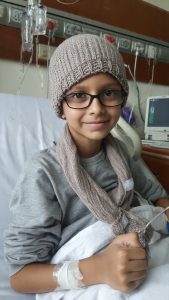
This week, I want to share the story of Ali, an eight year old boy whose life has been suddenly interrupted by illness. Ali comes from a middle class family and lives with his parents and two younger brothers. His days used to be filled with school, small arguments over toys, and the kind of laughter that echoes in every corner of a home. But everything changed the day the doctors gave his family the news: “Ali had leukemia.”

The moment they heard it, it was too heavy to carry. His mother, who had always been the heart of the home, clutched her scarf so tightly that her fingers turned white. Her eyes, wide and unblinking, filled with tears she could not hold back. “Leukemia,” the doctor said, and for her, the word had no meaning at first only a wave of shock, fear, and helplessness. Ali’s father sat silently, jaw tight, as if trying to hold back an overwhelming tide of panic. Their younger children, sensing something was wrong but not understanding what, looked on with confusion and worry.

For Ali, the word “cancer” didn’t make sense. He noticed that his parents were quiet in a way they had never been before. He noticed the tiredness in his mother’s eyes, the worry in his father’s face. He didn’t yet understand that his frequent bruises and nosebleeds were part of something much bigger. All he knew was that something had changed, and he could feel it in the way his parents looked at him, their hands trembling as they held his.

The days after the diagnosis were heavy. Hospital visits began in quick succession blood tests, bone marrow biopsies, chemotherapy consultations. Ali’s mother moved like a shadow through their home, exhausted, her eyes red from crying quietly when no one was watching. Nights were the hardest. She would sit beside Ali’s bed, brushing his hair back, whispering softly, “It’s going to be okay,” even though she wasn’t sure if it would be. Ali, sensing her worry, would squeeze her hand tightly, offering his own small reassurance in return.

Ali’s younger brothers felt the weight of the illness too, even if they could not yet understand it. They missed the carefree days when Ali’s presence meant laughter and games, not hospital visits and whispered fears. Sometimes, they would peek into his hospital room, and just watching him lie there, pale and quiet, seemed enough to make the world feel heavier.

What struck me about Ali’s family is there were only quiet moments of small courage, tiny hope. A hug after a particularly difficult day, a bedtime story read despite the exhaustion these were the threads that held them together.

The hospital staff became part of their lives, helping them navigate the frightening and unfamiliar world of pediatric cancer. Nurses would gently hold Ali’s hand during blood draws; doctors patiently explained each step of treatment. Social workers tried to ease the emotional load on a family suddenly burdened with fear, uncertainty, and financial strain. Still, despite the care, there was no denying the profound pain of watching a child suffer.

Ali’s story is about ordinary people facing an extraordinary situation. It is about a mother who cries quietly in the night, a father who wrestles with feelings of helplessness, and siblings trying to hold onto some sense of normalcy. It is about living with uncertainty every day and still trying to go through it.  

Even in the midst of hardship, hope persists in the smallest ways. Ali smiles when he sees his favorite cartoon, laughs quietly when his younger brothers climb into bed with him, and grips his mother’s hand during hospital procedures. Ali’s journey has just begun, and the road ahead is uncertain. But his story is a reminder of what childhood cancer truly looks like, the quiet struggles, the subtle victories, and the faint lights of hope that families cling to when the world feels impossibly heavy.

For every parent, sibling, or caregiver reading this, Ali’s story reflects human resilience in its quietest form. It is about showing up, even when you are afraid, even when you feel powerless, and finding strength in the small, ordinary ways we care for the ones we love.

Prayers for Ali and all the sick children and their families who have to face this pain of cancer. May Allah make it easy for them. Aameen


Note: “The child’s name has been changed to protect privacy, and the accompanying image is AI-generated.”


Friday, January 9, 2026

Warriors and Survivors - 247

Children Cancer Stories by Rukh Yusuf - Blog # 247


I am Rukh Yusuf, Clinical Pharmacist, also specialized in Total Parenteral Nutrition and Bone Marrow Transplant. I have worked in the Pediatric Oncology unit of a public hospital. The mission of this blog is to bring to you the real-life stories of child patients suffering from cancer. Cancer is still a difficult disease to handle and treat. However, when it strikes the children, some so young that they cannot even speak, their agony is beyond expression and words. Let us pray especially for children suffering from cancer for early and complete remission. May Allah shower His Merciful Blessings upon them. Aameen. 


Three Year Old Rayan and the Weight of Words No Parent Is Ready to Carry

Rayan is three years old.

At an age when his world should revolve around toy cars, bedtime stories, and the comfort of his parents’ arms, Rayan now spends his days inside the walls of a children’s hospital. The beeping of monitors has replaced the laughter of playgrounds. Needles, masks, and unfamiliar faces have become part of his routine. Just weeks ago, Rayan was diagnosed with leukemia.

For most people, the word cancer is heavy. For parents, it is devastating. For the parents of a three-year-old child, it is unbearable.

Rayan comes from a middle class family one of millions who work hard, live modestly, and stretch every rupee carefully. His parents are educated. They read. They ask questions. They try to understand. And yet, despite their education, they are drowning in a sea of medical terminology that feels impossible to navigate.

“Acute,” “malignancy,” “bone marrow,” “chemotherapy,” “remission,” “relapse.”

These are not just words. They are loaded with fear, uncertainty, and trauma. They arrive abruptly, spoken in calm clinical tones that contrast sharply with the chaos they unleash inside a parent’s heart. Education does not shield you from fear when the diagnosis concerns your child. Literacy does not soften the blow of hearing that your baby’s life now depends on test results, response curves, and survival statistics.

Rayan’s parents sit across from doctors, nodding as explanations unfold, trying desperately to absorb information while their minds scream the same question again and again: Will our child survive?

There is a unique cruelty in pediatric cancer. Children do not understand why they hurt. They do not know why they are confined to hospital rooms or why their parents cry quietly when they think no one is watching. Rayan does not know what leukemia is. He only knows that his parents are anxious, that strangers poke him with needles, and that home feels far away.

And yet, amid all this, Rayan smiles.

He smiles at nurses who call him brave. He smiles when his parents read him stories from worn-out books they brought from home. He smiles even when his body is tired because children, in their innocence, often show resilience that adults struggle to comprehend.

For his parents, however, resilience comes at a cost.

They worry constantly not only about Rayan’s health, but about finances, time off work, transportation, and the invisible bills that accumulate silently. Middle class families often fall into a painful gap, earning too much to qualify for extensive assistance, yet not enough to absorb prolonged medical expenses without strain. Every decision becomes layered with stress, guilt, and fear.

But beyond finances, the emotional burden is the heaviest.

Cancer steals certainty. It robs parents of the ability to plan, to imagine birthdays, school days, and futures without hesitation. Life becomes divided into cycles of treatment, lab results, and waiting. Endless waiting.

What makes this journey even harder is how isolating it can feel. Friends and family want to help but often don’t know how. Conversations become awkward. Words feel inadequate. Some people disappear not out of cruelty, but because they don’t know how to face such pain.

And so Rayan’s parents learn to carry this quietly. They learn a new language they never asked to speak. They learn how to be strong while feeling shattered inside. They learn how to advocate for their child in a system that can feel overwhelming even to the most prepared.

Rayan’s story is not unique but that does not make it any less important.

It reminds us that behind every diagnosis is a family struggling to understand, to cope, and to survive emotionally alongside their child. It reminds us that cancer is not just a medical condition; it is a deeply human experience that affects entire families, especially the smallest and most vulnerable among us.

Rayan is three years old. He is not a case number or a diagnosis. He is a child who deserves compassion, gentleness, and hope.

And his parents deserve support not just medically, but emotionally and socially as they walk this path they never chose.

If nothing else, let Rayan’s story remind us to be kinder, more patient, and more present. Because sometimes, the greatest help we can offer is simply to acknowledge the weight others are carrying and to stand with them in it.

Prayers for Ryan and all the sick children and their families who have to face this pain of cancer. May Allah make it easy for them. Aameen


Note: “The child’s name has been changed to protect privacy, and the accompanying image is AI-generated.”


Friday, January 2, 2026

Warriors and Survivors - 246

Children Cancer Stories by Rukh Yusuf - Blog # 246


I am Rukh Yusuf, Clinical Pharmacist, also specialized in Total Parenteral Nutrition and Bone Marrow Transplant. I have worked in the Pediatric Oncology unit of a public hospital. The mission of this blog is to bring to you the real-life stories of child patients suffering from cancer. Cancer is still a difficult disease to handle and treat. However, when it strikes the children, some so young that they cannot even speak, their agony is beyond expression and words. Let us pray especially for children suffering from cancer for early and complete remission. May Allah shower His Merciful Blessings upon them. Aameen. 


Arfa is six years old, an age that usually belongs to scraped knees, half finished coloring books, and loud disagreements over whose turn it is to sit by the window. Until recently, her world looked exactly like that. She lives in Sialkot with her parents and two younger brothers, in a home that was full in the ordinary way school bags by the door, small shoes scattered without pattern, and the soft noise of daily life continuing without much thought.

The first signs that something was wrong did not arrive all at once. They came quietly, in ways that were easy to explain away. Arfa began to feel tired more often. She would sit down during playtime, resting her head against her mother’s arm, asking to be carried even on short walks. There were fevers that came and went, not high enough to alarm, but frequent enough to leave her parents uneasy. Bruises appeared on her arms and legs, darker than expected, lingering longer than they should have. Her appetite faded, and the brightness that once followed her through the house dulled slightly, like a light turned down rather than off.


At first, everyone thought it was a phase. A seasonal illness. The strain of school. In families, especially those raising young children, reassurance often feels more practical than worry. But as days passed, Arfa’s fatigue deepened. She slept more and spoke less. When she complained of bone pain, especially in her legs, her mother felt a quiet fear that did not yet have words.

The hospital visit was meant to bring relief. Tests, the family believed, would give a simple explanation and a simple treatment. Instead, the diagnosis arrived with unfamiliar terms and measured voices: B-cell leukemia. For Arfa, the words meant nothing. She focused on the cold stethoscope and the nurse who smiled kindly. For her parents, those words split time into a before and an after.

Shock does not always look dramatic. In Arfa’s family, it looked like silence. Her father asked the doctor to repeat himself, not because he didn’t hear, but because hearing again felt like delaying the truth. Her mother nodded through explanations she barely absorbed, her thoughts fixed on one impossible question: how could something so serious be living inside a child who still asked for bedtime stories?

Telling the rest of the family was harder than hearing it the first time. Grandparents sat quietly, hands folded, as if movement might disturb the fragile balance of the moment. Arfa’s younger brothers sensed the change without understanding it. They noticed whispered conversations, the sudden seriousness of adults, the way their sister was watched more closely now. They asked why she was going to the hospital so often and why their parents looked quiet.

Grief entered the household not as loud crying, but as small losses accumulating day by day. The loss of routine. The loss of certainty. The loss of a future that had once seemed predictable. School mornings were replaced with hospital corridors. Playdates were postponed indefinitely. Conversations shifted from plans and celebrations to test results and treatment schedules.

Fear of the future settled in quietly. It appeared in the long pauses after doctors’ visits, in the careful budgeting of emotions as much as finances, and in the way Arfa’s parents began to measure time differently, not in months or years, but in cycles of treatment and next appointments. They feared pain they could not prevent, questions they could not yet answer, and outcomes they could not control.

And yet, life did not stop completely. Arfa still laughed at silly jokes. She still argued gently with her brothers over toys. Sometimes, in the middle of it all, she asked simple questions like when she could go back to school, whether her hair would grow again, if she could still wear her favorite dress. These moments did not erase the fear, but they softened it, reminding everyone that illness had entered her life, not replaced it.

Arfa’s story is not uncommon. It is a story of a family learning to live with uncertainty, of ordinary days reshaped by an unexpected diagnosis. It is about quiet resilience found in routine care, in holding hands during blood tests, and in believing gently, carefully that tomorrow is still worth imagining, even when it looks different than before.

Prayers for Arfa and all the sick children and their families who have to face this pain of cancer. May Allah make it easy for them. Aameen


Blog Post # 03 by Rukh Yusuf