Friday, April 24, 2026

Warriors and Survivors - 262

 Children Cancer Stories by Rukh Yusuf - Blog # 262


I am Rukh Yusuf, Clinical Pharmacist, also specialized in Total Parenteral Nutrition and Bone Marrow Transplant. I have worked in the Pediatric Oncology unit of a public hospital. The mission of this blog is to bring to you the real-life stories of child patients suffering from cancer. Cancer is still a difficult disease to handle and treat. However, when it strikes the children, some so young that they cannot even speak, their agony is beyond expression and words. Let us pray especially for children suffering from cancer for early and complete remission. May Allah shower His Merciful Blessings upon them. Aameen. 

Arham is five years old. Until a few months ago, his days followed a familiar rhythm, school in the morning, cartoons in the afternoon, and small negotiations with his mother over finishing his meals. He liked cars, especially the ones that could be taken apart and reassembled. His father often joked that Arham asked more questions in a day than he could answer in a week.

The changes began quietly. It was not something that could be pointed to on a single day. His mother first noticed that he was getting tired more easily. After coming home from school, instead of running around the house, he would lie down on the sofa, sometimes without even changing out of his uniform. There were evenings when he fell asleep before dinner, something that had never happened before.

At first, it was easy to attribute it to routine childhood fatigue. School had become slightly more demanding, and the weather in Lahore had been fluctuating. But then came the fevers low-grade, persistent, often returning at night. They were not alarming enough to rush to the hospital, but they lingered long enough to cause unease.
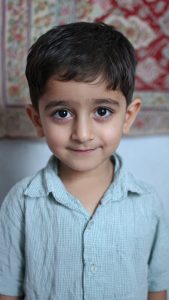
His parents are both educated, attentive, and accustomed to making informed decisions. His father works in a corporate setting, and his mother, though currently at home, has a background in education. They are not unfamiliar with medical information, nor are they quick to panic. Still, there was a point when reassurance began to feel insufficient.

Arham started developing small bruises on his legs. At first, they seemed like the usual marks of childhood perhaps from playing or bumping into furniture. But there were more of them, and some appeared in places that didn’t quite make sense. His mother also noticed that he had become unusually pale. There was a softness to his face that had replaced the usual flush of a healthy child.

The decision to seek further evaluation came not out of fear, but out of a quiet understanding that something was not right.

The diagnosis; “pediatric leukemia”  arrived after a series of tests, consultations, and waiting. For Arham, the hospital visits were confusing more than frightening. He asked questions about the machines, about why blood was being drawn so often, and whether he could go back to school soon. His world had not yet adjusted to the gravity of what was happening.

For his parents, the moment was different. It did not unfold dramatically. There were no visible breakdowns or immediate expressions of despair. Instead, there was a kind of stillness, a pause where information had to be processed carefully, piece by piece. They listened, asked questions, took notes, and thanked the doctors.

They could afford treatment. That fact, while significant, did not soften the emotional weight of the diagnosis. It simply removed one layer of uncertainty. The rest remained.

Their home has changed in subtle ways. There is now a corner dedicated to medications, neatly arranged and labeled. Appointments are written on a calendar that is checked multiple times a day. Conversations between the parents often happen in lower tones, not because they are hiding something, but because they are trying to maintain a sense of normalcy for Arham.

His mother spends more time observing him how much he eats, how long he sleeps, whether he seems more tired than usual. These observations are not obsessive, but they are constant. His father, who once returned home and immediately engaged in play, now takes a moment before entering the house, as if preparing himself to step into a space that requires a different kind of presence.

Arham’s symptoms continue to shape their days. There are mornings when he wakes up with less energy, when even getting dressed feels like a task. There are days when he complains of vague aches in his legs, pointing to areas that cannot always be clearly defined. His appetite varies, some days he eats normally, on others, even his favorite foods are left untouched.

Despite this, there are moments that remain unchanged. He still asks for stories at night. He still wants to know why certain things work the way they do. He still laughs at small jokes, though sometimes the laughter is shorter, followed by a quiet pause.

The family does not speak about the illness in overwhelming terms. They have chosen a language that is measured and age appropriate. Arham knows that he is unwell and that the doctors are helping him get better. He does not yet carry the full understanding of the diagnosis, and his parents are careful not to impose it prematurely.

Their extended family has been supportive, but the immediate experience remains deeply personal. It is in the small decisions like what to tell Arham, how to structure the day, when to express concern and when to hold it back, that the real challenge lies.

There is no dramatic shift in their identity as a family. They are still who they were, but with an added layer of responsibility that requires patience, resilience, and a kind of quiet endurance. The routines they once took for granted now require adjustment, and the future, though still present, is approached with more caution.

Arham remains at the center of it all, not as a symbol of struggle, but as a child navigating a phase he does not fully understand. His parents walk alongside him, not always with certainty, but with a steady commitment to being present, attentive, and composed.

The story is not defined by extremes. It is shaped by the in-between moments the waiting, the observing, the adapting. It is in these moments that the weight of the diagnosis is most clearly felt, not through overt expressions, but through the quiet, continuous effort to hold everything together.

Prayers for these brave souls and their families who have to face this pain of cancer. May Allah make it easy for them. Aameen


Friday, April 17, 2026

Warriors and Survivors - 261

 Children Cancer Stories by Rukh Yusuf - Blog # 261


I am Rukh Yusuf, Clinical Pharmacist, also specialized in Total Parenteral Nutrition and Bone Marrow Transplant. I have worked in the Pediatric Oncology unit of a public hospital. The mission of this blog is to bring to you the real-life stories of child patients suffering from cancer. Cancer is still a difficult disease to handle and treat. However, when it strikes the children, some so young that they cannot even speak, their agony is beyond expression and words. Let us pray especially for children suffering from cancer for early and complete remission. May Allah shower His Merciful Blessings upon them. Aameen. 


Ali is seven. Until a few weeks ago, his days were shaped by ordinary things that never feel ordinary until they are interrupted. School mornings with a half-eaten breakfast, crayons scattered across notebooks, and a sister who insisted on correcting his spelling as if it were a personal responsibility.

The first signs were easy to dismiss. Fatigue that looked like laziness. Bruises that seemed to appear without reason. A fever that returned more often than it should. His parents, like most families, moved between reassurance and quiet concern, telling themselves it was something minor, something temporary. A childhood illness that would pass.

But the hospital visits grew longer, and the explanations became heavier.

When the word LEUKEMIA finally entered their lives, it did not arrive as understanding. It arrived as confusion.

For Ali, the meaning of it all is still unclear. He remembers white walls, the smell of antiseptic, and people speaking in soft but serious tones. He remembers being asked to lie still. He remembers his mother holding his hand a little too tightly, as if letting go would mean losing him to something invisible in the room.

His parents are still trying to translate the diagnosis into something human-sized. Something that fits into daily life. Something that can be managed between school fees, grocery lists, and work shifts. But leukemia does not fit neatly into any of those categories. It stretches time in ways that are difficult to explain to a family that was, until recently, planning routine things, term exams, birthday cakes, a new school uniform for next year.

The father now divides his attention between work and hospital corridors, carrying a quiet calculation in his mind: how long savings last, what insurance will cover, what remains uncertain. The mother measures time differently now. Not in days of the week, but in treatment cycles, lab reports, and the next appointment. Sleep has become fragmented, replaced by a vigilance that does not switch off at night.

Ali’s older sister is also learning a new role, though no one has formally given it to her. She is old enough to sense the shift but not old enough to fully understand it. She asks questions that adults avoid answering directly. She sits beside Ali when he is too tired to speak, trying to turn fear into something manageable by staying close.

What often remains unspoken in these early days is how quickly life reorganizes itself around illness. Education becomes inconsistent. Work becomes unstable. Social circles shrink, not because people disappear, but because energy does. Visits become rare. Messages go unanswered. The world outside continues as usual, which can feel strangely unfair when your own world has stopped behaving predictably.

And then there is the emotional weight that does not always have a name. The quiet fear that lives in pauses between conversations. The uncertainty about what the next months will look like, and the even harder uncertainty about what the years will become. Families rarely ask for predictions, but they live inside them anyway.

In pediatric oncology, we often talk about treatment protocols, survival rates, and response curves. But sitting across from families like Ali’s reminds us that none of those terms exist in isolation. They sit inside homes. They affect school attendance. They shape employment decisions. They influence how siblings grow up.

For Ali’s family, the journey is no longer about returning to what life was. It is about learning how to exist in what life has become.

There will be difficult weeks ahead, chemotherapy sessions that leave him exhausted, hospital stays that blur into each other, and moments when hope feels like something fragile. But there will also be smaller, quieter forms of resilience: a sister reading beside his bed, a father adjusting work hours without announcement, a mother learning medical language she never expected to know.

No one in this family asked for a long story with this many unknown chapters. But like many families facing childhood leukemia, they are now living inside one.

And slowly, without realizing it, they begin to learn its language.

Prayers for these brave souls and their families who have to face this pain of cancer. May Allah make it easy for them. Aameen


Friday, April 10, 2026

Warriors and Survivors - 260

Children Cancer Stories by Rukh Yusuf - Blog # 260


I am Rukh Yusuf, Clinical Pharmacist, also specialized in Total Parenteral Nutrition and Bone Marrow Transplant. I have worked in the Pediatric Oncology unit of a public hospital. The mission of this blog is to bring to you the real-life stories of child patients suffering from cancer. Cancer is still a difficult disease to handle and treat. However, when it strikes the children, some so young that they cannot even speak, their agony is beyond expression and words. Let us pray especially for children suffering from cancer for early and complete remission. May Allah shower His Merciful Blessings upon them. Aameen. 


Muhammad Arsalan is 3.5 years old, but his life over the past year has moved at a pace no child should have to keep up with.

He is the son of Imran, from Shabqadar in Charsadda, a place where life follows a simple rhythm. Mornings begin early, streets are familiar, and families rely on routine to get through the day. Illness, when it comes, is usually expected to pass with time, rest, or a visit to a local clinic. What Arsalan’s family faced was something entirely different.

It started quietly. A swelling that didn’t seem urgent at first. Some discomfort. A sense that something wasn’t quite right. Like many families in similar settings, there was hesitation—partly hope that it would resolve on its own, and partly the reality of limited access to specialized care. Travel to a major hospital is not a simple decision when it means leaving work behind, arranging finances, and stepping into an unfamiliar system.

By the time Arsalan reached Khyber Teaching Hospital, the diagnosis came as a shock: a germ cell tumor, specifically a yolk sac tumor. For his parents, the words themselves were difficult to grasp, let alone the implications. Cancer is not just a disease in such settings it is a disruption of everything a family knows.

Treatment began under the care of Dr. Kashif Afridi. What followed were months that blurred into each other—hospital visits, chemotherapy cycles, waiting rooms, and long journeys back and forth from Charsadda. Each visit carried its own weight. Sometimes it was physical exhaustion. Sometimes it was the uncertainty of what the next report would show.

For Arsalan, the hospital became a second world. A place where he learned to sit still longer than a child should have to. Where he became familiar with needles, medications, and the quiet understanding in the eyes of other children going through similar battles. There were days he didn’t feel like himself at all days when eating was difficult, when energy was gone, when even small things felt overwhelming.

For his father, Imran, the challenge was different but just as heavy. Balancing the role of caregiver with the responsibility of providing for the family is never easy, especially when resources are limited. Every trip to the hospital meant arranging money, time, and logistics. Every delay or complication carried not just emotional stress, but financial strain as well.

Yet, like many families in similar circumstances, they adapted. Not because it was easy, but because there was no alternative.

There were small moments that carried them through. A slightly better lab report. A day when Arsalan felt well enough to smile again. A conversation with the doctor that offered reassurance, even if cautiously. These moments, though brief, became anchors.

Over time, treatment progressed. What once felt endless slowly began to take shape as a path with an endpoint.

On February 2, 2026, Arsalan completed his treatment.

There was no grand celebration. No dramatic moment. Just a quiet sense of something lifting—a weight that had been present for months, finally easing. For the family, relief did not come as excitement, but as a deep, steady calm.

Follow-up visits continue, as they must. Each one carries a mixture of hope and lingering worry. But for now, Arsalan is stable. He is back in his environment, among familiar faces and routines that had once been interrupted.

He is still a child, and slowly, he is returning to that space.

Stories like Arsalan’s often remain within the walls of hospitals or the boundaries of families who live them. In places like Shabqadar and Charsadda, access to early diagnosis and specialized care is not always immediate. Delays are common, not out of neglect, but out of circumstance.

What stands out in such journeys is not just the disease, but the resilience built around it—families adjusting to systems they were never prepared to navigate, children adapting to realities far beyond their years, and healthcare providers working within constraints to offer continuity of care.

Arsalan’s story does not end with treatment. Like many post-treatment children, his journey continues through follow-up, monitoring, and gradual reintegration into everyday life. But reaching this point matters.

It means that despite the delays, the distance, and the difficulty, treatment was completed.

It means that, for now, the disease is in control, Arsalan and family can have a relief and they can once again start their life. 

And in settings where even reaching a hospital can be a challenge, that in itself is not a small thing.

Prayers for these brave souls and their families who have to face this pain of cancer. May Allah make it easy for them. Aameen


Friday, April 3, 2026

Warriors and Survivors - 259

Children Cancer Stories by Rukh Yusuf - Blog # 259


I am Rukh Yusuf, Clinical Pharmacist, also specialized in Total Parenteral Nutrition and Bone Marrow Transplant. I have worked in the Pediatric Oncology unit of a public hospital. The mission of this blog is to bring to you the real-life stories of child patients suffering from cancer. Cancer is still a difficult disease to handle and treat. However, when it strikes the children, some so young that they cannot even speak, their agony is beyond expression and words. Let us pray especially for children suffering from cancer for early and complete remission. May Allah shower His Merciful Blessings upon them. Aameen. 


There are days that divide life into two parts, before and after. For Asma Ali and her family, that day came quietly, without warning.

Asma is from Mardan. Her life was simple, familiar, and close to home. Like many families, their days moved around routine, school, meals, small conversations, and the comfort of knowing what tomorrow would look like. Nothing felt uncertain.

Until it did.

When Asma first started feeling unwell, it didn’t seem serious. These things usually don’t. A few symptoms, a few visits, some waiting. But slowly, concern replaced reassurance. The hospital visits became more frequent, the tests more detailed, and the waiting… heavier.

Then came the diagnosis.

Germ Cell Tumor.

For her father, Bahar Ali, it was not just a medical term. It was a moment that stayed still. Hearing that your child has cancer is not something anyone prepares for. It brings a kind of silence that is hard to explain. Questions come, but answers feel far away.

Asma may not have fully understood the weight of the diagnosis, but she understood enough. She could see it in her father’s face, in the way people spoke around her, in the sudden seriousness that entered their lives.

Treatment began soon after at KTH Peshawar under the care of Doctor Kashif Afridi, a very dedicated one. There was no time to dwell for too long. Decisions had to be made, and strength had to be found somewhere, somehow.

She went through six cycles of JEB chemotherapy, along with surgery.

Each cycle brought its own challenge. Chemotherapy is not just about medicines; it is about enduring what those medicines do to the body. There were days when Asma felt too tired to even sit up for long, days when eating felt like a task, and nights that passed slowly.

For her father, the struggle was different, but just as heavy. He had to be steady when everything felt uncertain. Sitting beside her during treatments, watching her go through pain he couldn’t take away, and still finding the strength to reassure her this is a kind of courage that often goes unseen.

There were practical difficulties too. Traveling from Mardan, arranging everything around hospital schedules, managing responsibilities back home, life did not pause, even when it felt like it should have.

But through all of this, they kept going.

What stood out during this journey was the consistency of care. Their doctor approached Asma not just as a diagnosis, but as a child who needed careful attention at every step. There was patience in decisions, clarity in guidance, and a quiet dedication that families notice even when nothing is said out loud.

That kind of presence matters more than it seems.

As the treatment continued, small improvements began to appear. Not dramatic changes, but enough to hold on to. In long treatments, hope often comes in small, almost unnoticeable ways.

And then, after months of effort, came a day that felt different.

17 September 2025.

The end of treatment.

It did not come with loud celebrations. Instead, it brought a deep, quiet relief. The kind where you finally breathe without realizing you had been holding it in for so long.

Remission.

For Asma and her father, it meant something simple yet profound—the chance to return to life without constant fear. The hospital visits became fewer. Conversations became lighter. The future, once uncertain, began to feel open again.

Since September 2025, Asma has been on follow-up. Today, she is doing well. There is a calmness around her now, a sense of normalcy slowly finding its way back.

But her story does not end with treatment.

It stays in the strength her father showed when he had every reason to break. It stays in the quiet resilience Asma carried through months of discomfort. And it stays in the effort of a doctor who showed up, day after day, for yet another patient who needed care, attention, and hope.

Not every story is loud.

Some, like Asma’s, are soft but they stay with you.

Prayers for these brave souls and their families who have to face this pain of cancer. May Allah make it easy for them. Aameen


Blog Post # 03 by Rukh Yusuf